
From Reactive Compliance to Proactive Prevention: How Will Your Organisation Fare with the New Harassment Duties?
From 30 October 2026, employers will face heightened obligations to prevent sexual harassment in the workplace. At the same time, new protections against third-party harassment will place additional responsibilities on organisations, whose employees interact with customers, clients, suppliers, contractors or members of the public, to take reasonable steps to prevent harassment from occurring in those interactions.
While many employers already have policies and training in place, the key message from the latest guidance is clear: compliance is no longer about taking some reasonable steps; employers will be expected to take all reasonable steps to prevent sexual harassment or face increased financial penalties.
What’s Changing?
The existing duty requires employers to take reasonable steps to prevent sexual harassment in the workplace. From 30 October, this duty is elevated to become a requirement to take all reasonable steps. The duty is preventative and anticipatory, meaning employers must proactively identify circumstances where harassment could occur and take action before incidents happen.
The change is designed to encourage a more comprehensive approach, focusing on prevention rather than simply responding to complaints after the event. This represents a significant shift from reactive compliance to proactive prevention.
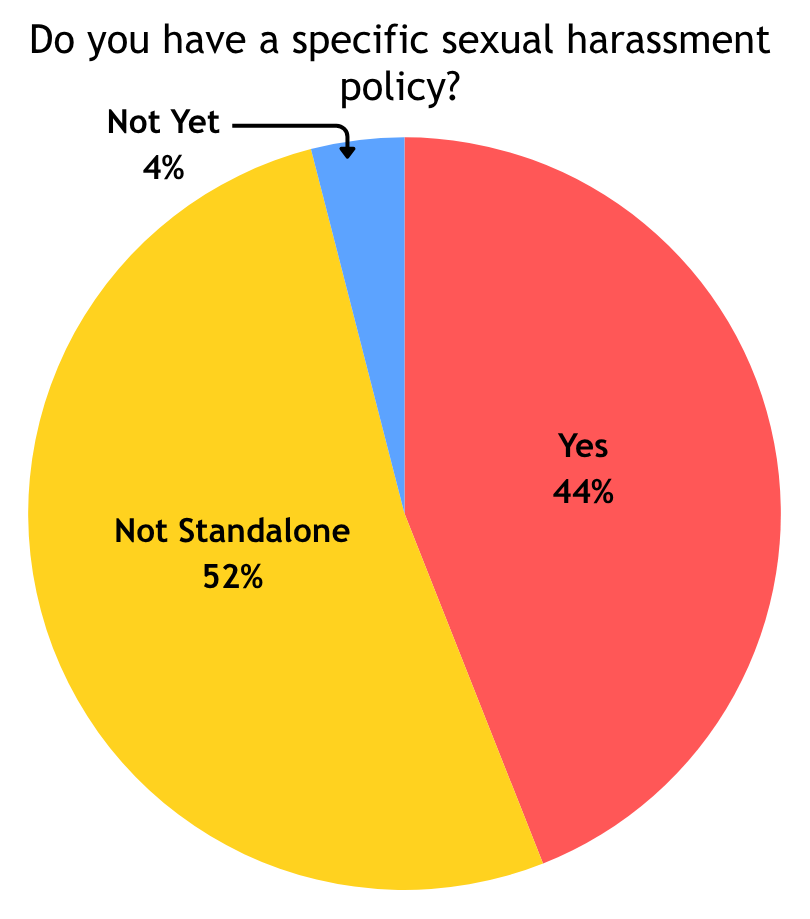
Encouragingly, when we polled employers during a recent webinar on the new duties, only 4% said introducing a sexual harassment policy was still on their to-do list, suggesting most organisations have already started taking steps in this area. The challenge now is ensuring those measures are robust enough to meet the higher standard of taking “all reasonable steps” and are truly preventative in nature.
Risk Assessments Are Becoming Essential
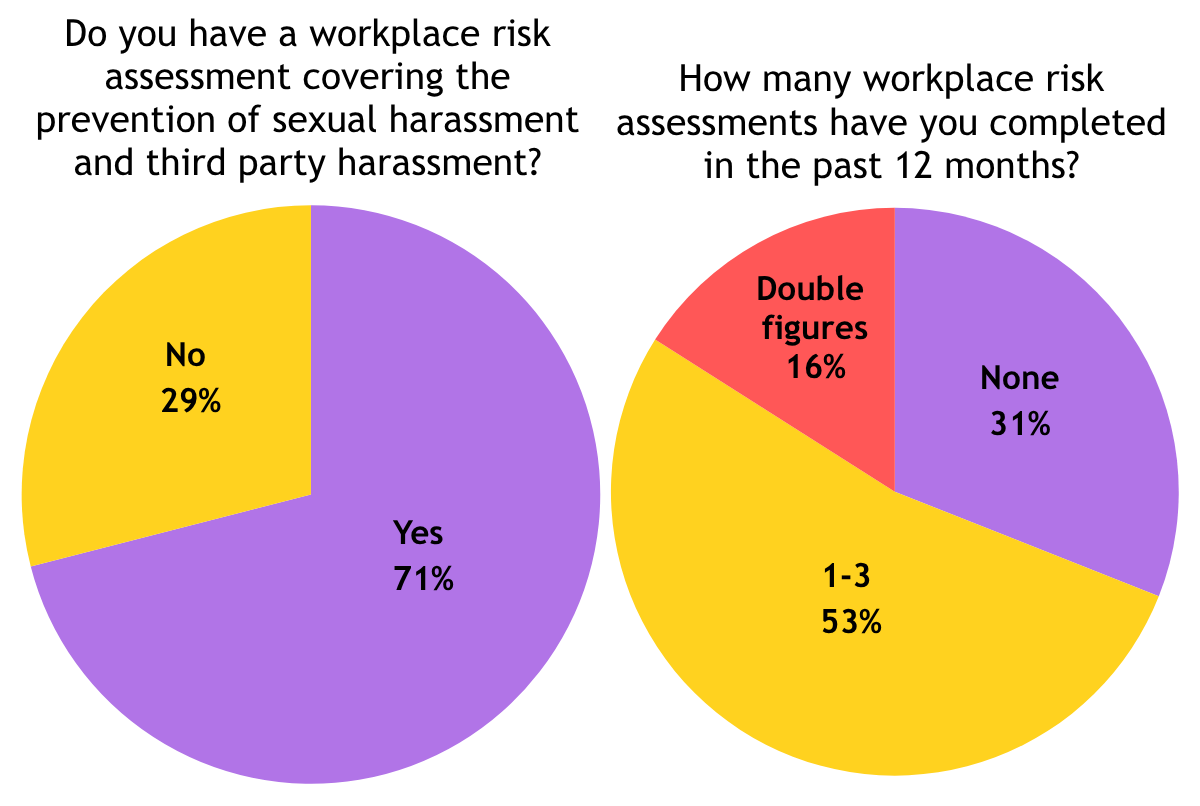
Despite the increasing focus on risk assessments, approaches vary considerably. Whilst 71% of employers surveyed said they have an overarching workplace risk assessment covering sexual harassment and/or third-party harassment, 29% said they do not. When asked how many specific risk assessments linked to environmental, social or cultural factors they had completed during the previous 12 months, 32% had completed none, 53% had undertaken between one and three, and 16% had completed multiple risk assessments (into double figures).
These results suggest that, for many employers, risk assessments remain an area of active development.
As the focus shifts towards prevention, employers should consider whether a single overarching assessment is sufficient, or whether specific activities, locations, departments, or events warrant closer examination.
Both ACAS and EHRC guidance emphasise the importance of carrying out risk assessments. In fact, the EHRC has suggested that employers are unlikely to be able to demonstrate compliance with the preventative duty without having undertaken one.
Employers should be assessing where risks may arise, considering what measures could reduce those risks, and implementing all reasonable steps that are appropriate for their organisation. Areas commonly requiring consideration include:
- Customer-facing environments
- Lone working
- Work-related social events
- Travel and overnight stays
- Remote and hybrid working
- Online communications and messaging platforms
Policies and Training Are Only the Starting Point
Robust policies remain fundamental. Employers should review sexual harassment policies, bullying & harassment policies, grievance procedures, disciplinary procedures and, where appropriate, social media policies. However, simply having policies on paper will not be enough.
Encouragingly, when we recently surveyed employers during a webinar on the new duties, 96% already had a sexual harassment policy in place, either as a standalone policy (44%) or incorporated into a wider bullying and harassment policy (52%). However, having a policy is only one part of the picture. Employers will also need to demonstrate that employees understand the policy, know how to report concerns, and trust that appropriate action will be taken.
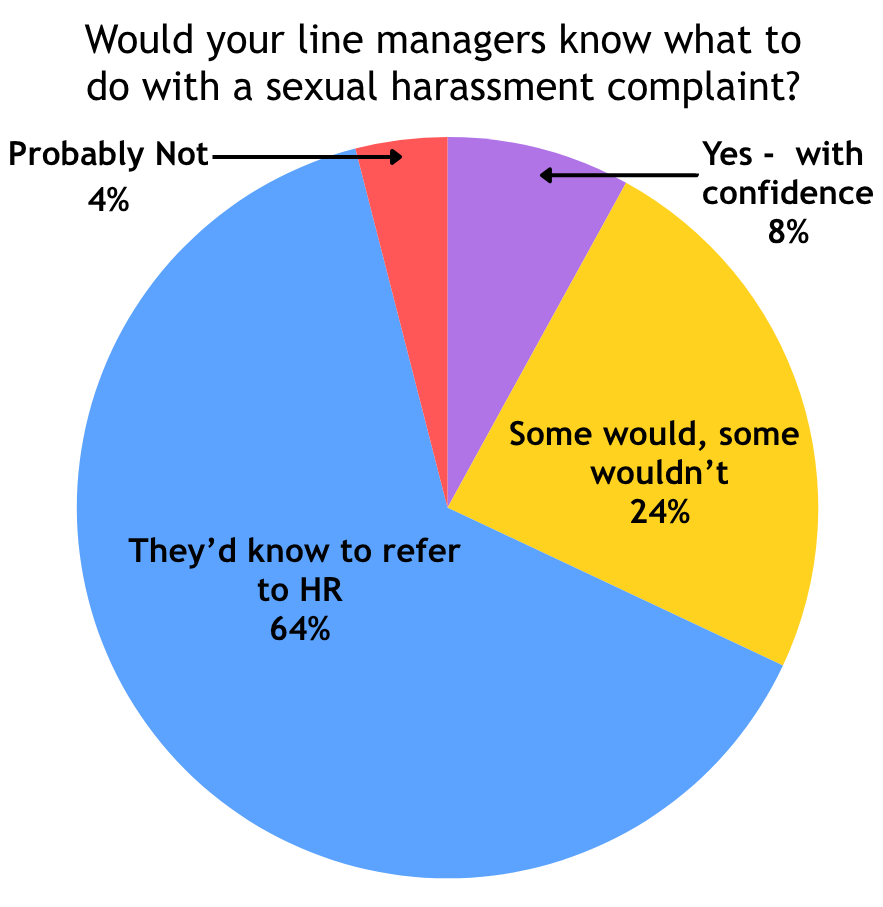
Training also needs to be meaningful, practical, and regularly refreshed. Employees should understand what sexual harassment is, how to report concerns, and what action the organisation will take in response. Managers should receive additional training so they are equipped to respond appropriately when complaints are raised.
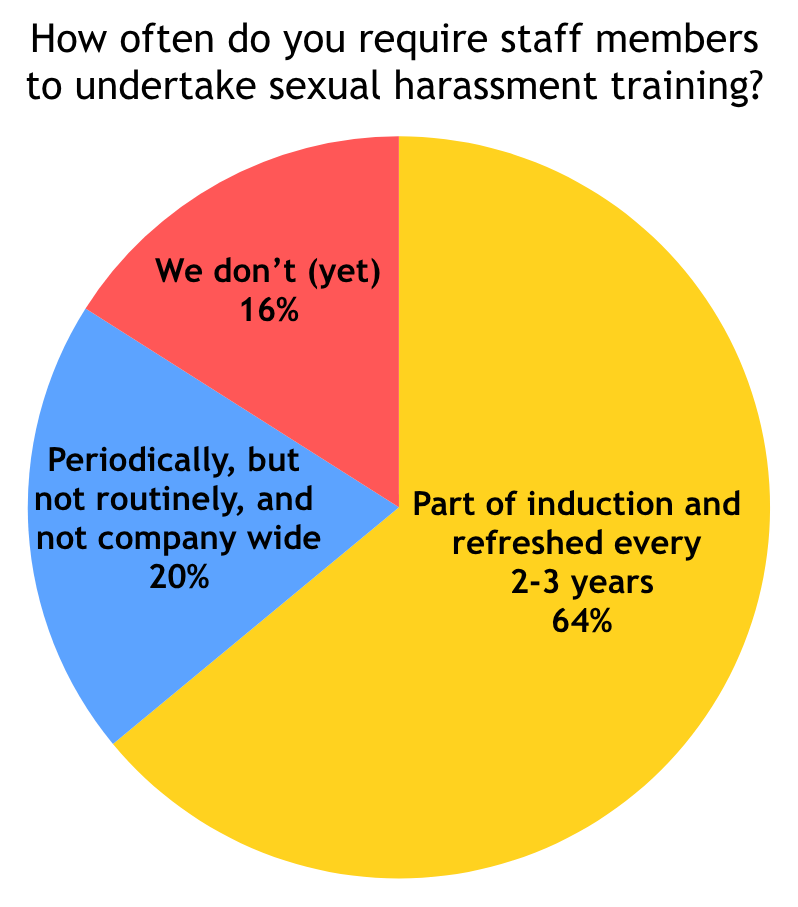 Whilst 64% of employers surveyed said sexual harassment training forms part of induction and is refreshed every two to three years, 20% said training takes place periodically but not routinely or organisation-wide, and 16% do not currently provide training at all.
Employers should consider whether their training remains effective, reflects current risks and adequately prepares both employees and managers for the issues they may encounter.
Creating the Right Culture
A recurring theme throughout the new guidance is workplace culture.
Employers should create an environment where:
- Sexual harassment is clearly not tolerated
- Employees feel confident raising concerns
- Complaints are taken seriously
- Reporting mechanisms are accessible
- Lessons are learned from incidents
A strong culture of prevention is likely to become increasingly important when assessing whether an employer has taken all reasonable steps.
Don’t Overlook Third-Party Harassment
Alongside the strengthened duty relating to sexual harassment, employers should prepare for the reintroduction of third-party harassment protections.
Third parties can include:
- Customers
- Clients
- Contractors
- Suppliers
- Visitors
- Service users
- Members of the public
Unlike the previous legal framework, a single incident of third-party harassment may be enough to create potential liability if an employer has failed to take all reasonable preventative steps.
Organisations should therefore include third-party harassment within their risk assessments, review workplace policies, consider signage and reporting procedures, and ensure employees know how to raise concerns. Choosing to engage with commercial partners who are able to demonstrate a strong track record in this area, and discounting others who do not, is also crucial in setting the correct tone.
What Should Employers Do Now?
With the new duties taking effect soon, employers should consider:
✅ Reviewing harassment related policies
✅ Conducting or updating risk assessments
✅ Refreshing employee and manager training
✅ Reviewing reporting mechanisms
✅ Addressing third-party harassment risks
✅ Ensuring appropriate records and evidence are retained
✅ Creating an ongoing review process rather than treating compliance as a one-off exercise
The key takeaway is that prevention, documentation, and continual improvement will be central to demonstrating compliance with the new obligations.